What worked on social media two years ago mostly doesn’t anymore. The platforms changed, the audiences changed, and the bar for what people will actually stop and watch has gone up considerably. The platforms changed. The audiences changed. And honestly, the whole idea of what “good social media” looks like has shifted pretty dramatically.
The social media trends 2026 has brought aren’t just updates to last year’s list Some of these aren’t just trends — they show how people actually use these platforms now, and what they expect from brands. Here’s what’s working right now.
Short Video Is the Default, Not the Exception
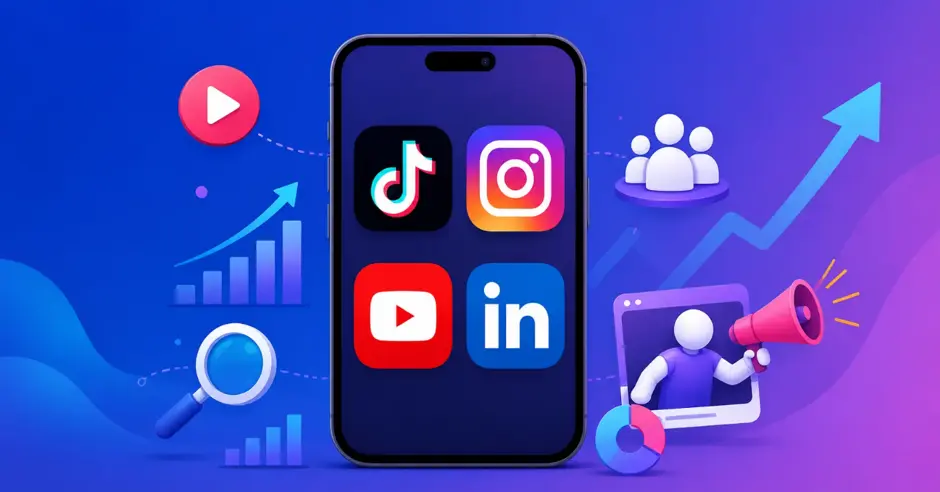
Short video isn’t a trend. It’s just how social media works. TikTok, Reels, YouTube Shorts, LinkedIn video — they’ve all settled on the same thing: clips under 60 seconds, built to grab you fast or lose you completely.
What’s actually changed in 2026 is the bar for quality. A shaky clip with bad lighting used to get a pass — the format was new, people were forgiving. Not anymore. People scroll fast now. If your hook isn’t clear in the first two seconds, they’re already gone.
Raw and real still works but raw and careless doesn’t..
What to Do About It
Pick one or two platforms and post short video consistently . You don’t need to be on every platform. A small business in Austin posting three good Reels a week showing real work, real results, real people will do more than a brand spread across six platforms posting whatever fills the calendar. Focus beats spread.
Social SEO Is Now a Real Strategy
A lot of people search for products, places, and advice on TikTok and Instagram before they ever open Google. That’s not a theory Adobe reported that 51% of people name TikTok’s short-form content as a top influence on their impulse purchases Gen Z opens TikTok the way you used to open Google. That changes what your captions and on-screen text actually do they’re not decoration anymore, they’re how people find you.
Keywords in your captions are actually indexed. Your video title functions more like an H1 tag than it used to.
At bestdigitalmarketingtrends.com, we’ve covered how social SEO overlaps with traditional SEO in ways that matter for traffic because the two channels are merging faster than most marketing teams realize.
What to Do About It
Write captions the way someone would actually search for your topic. If you’re a hair salon in Chicago, “best balayage hair Chicago 2026” in your caption does more work than five generic hashtags. Think search terms, not just vibes.
Community Over Virality Brands Are Finally Getting This Right
For years, the goal was reach. Get the video to go viral. Chase the algorithm. Post at the “right” time and hope for a spike.
That thinking is fading. The brands seeing real returns right now aren’t the ones with the biggest reach. They’re the ones with a comments section that actually moves
. Most say they’ll go to a competitor if they get nothing. That’s not a virality problem. That’s a responsiveness problem and it’s one a lot of brands are still ignoring.
Instagram broadcast channels, Facebook private groups, Sub stack, BlueSky these are getting real attention now from brands that used to put everything into their public feed. The audience is smaller in those spaces. That’s kind of the point.
What to Do About It
Pick one community channel and actually use it. Reply to comments. Start conversations
Micro-Influencers Are Outperforming Celebrities By a Lot
Still waiting for a celebrity to say yes to your brand deal? Here’s something worth knowing: about 75% of agencies say micro and nano-influencers beat celebrities on engagement and return on investment. Makes sense, really. Someone with 8,000 followers in a tight niche — budget travel in the Pacific Northwest, say, or plant-based cooking for families — has an audience that actually trusts them. And trust means people actually read what they post.
What to Do About It
Are people actually responding? Are they asking questions, sharing their own experiences? That’s the audience you want access to.
Episodic Content Is Replacing the One-Off Post
Random one-off posts are a tough way to grow an audience. What’s working now is episodic content posts or videos that follow a thread or theme, so people actually come back for the next part. Sprout Social’s Q2 2025 Pulse Survey backs this up: 57% of social media users said they want brands to focus on series, not one-off posts. Basically, it’s the Netflix model — just running on Instagram or LinkedIn instead of a TV.
This works particularly well on LinkedIn, where thought leadership series posting one insight per week in a recognizable format builds name recognition faster than scattered individual posts.
What to Do About It
The specific format matters less than the fact that people know it’s coming. That’s what brings them back. Not the algorithm. Not luck. Just showing up in the same way, regularly enough that it becomes something they expect.
AI Content Creation: Useful Tool, not a Replacement
AI is everywhere in social content right now. By some estimates, around 70% of social media images now involve AI tools like Mi journey or DALL-E at some stage of production. That’s a lot.
Here’s the part nobody talks about enough. The more AI floods the feed, the more a real face on camera stands out. Unscripted, slightly imperfect, clearly not generated that stuff is cutting through right now in a way polished content isn’t.
It handles that fine. Just don’t hand it the parts that require an actual opinion or a real story. Audiences can tell. And in 2026, with so much generated content everywhere, they’re paying closer attention to that difference than they ever have before.
You can read more about building a balanced AI content strategy on bestdigitalmarketingtrends.com.
Cross-Brand Collaborations Are Driving Unexpected Wins
One of the more interesting social media trends 2026 has produced is the rise of cross-brand partnerships especially between brands that seem unrelated on the surface.
The Krispy Kreme and Vaseline Cera-Glow partnership is a recent example. Two brands that have nothing obvious in common tied together around the “glass-skin” aesthetic trend and created something people actually stopped to look at.
What This Means for Your 2026 Strategy
None of this is complicated. People want to feel like a brand actually sees them. They want a reply when they comment, content that’s worth watching, and some sign that a real person is running the account. That’s it. Bigger budgets don’t fix any of those things.
If you don’t know where to start, pick one trend from this post that fits what you can actually sustain right now and stick with it for 90 days. Not five things at once. One thing, done consistently, will show you more than a scattered attempt at everything ever will.
The opportunity is still wide open. Most brands are still posting like it’s 2022. Visit bestdigitalmarketingtrends.com for more on building a social strategy that actually keeps up.
FAQ
Yes — but not the old way. Posting and praying for a viral hit doesn’t work anymore.
Three to six months if you go organic. Paid ads move faster, but organic sticks. People who find you through a real post tend to stay. People who click an ad usually don’t. Most brands give up around week six — right when things would’ve started working.
Short video, still. But skip the text overlays and stock music. People want a real person talking to the camera, like they’re explaining something to a friend. Quick-answer videos are doing great too — people search TikTok and Instagram the way they used to search Google. Show up there, and you’ve got them before they knew they were looking.


